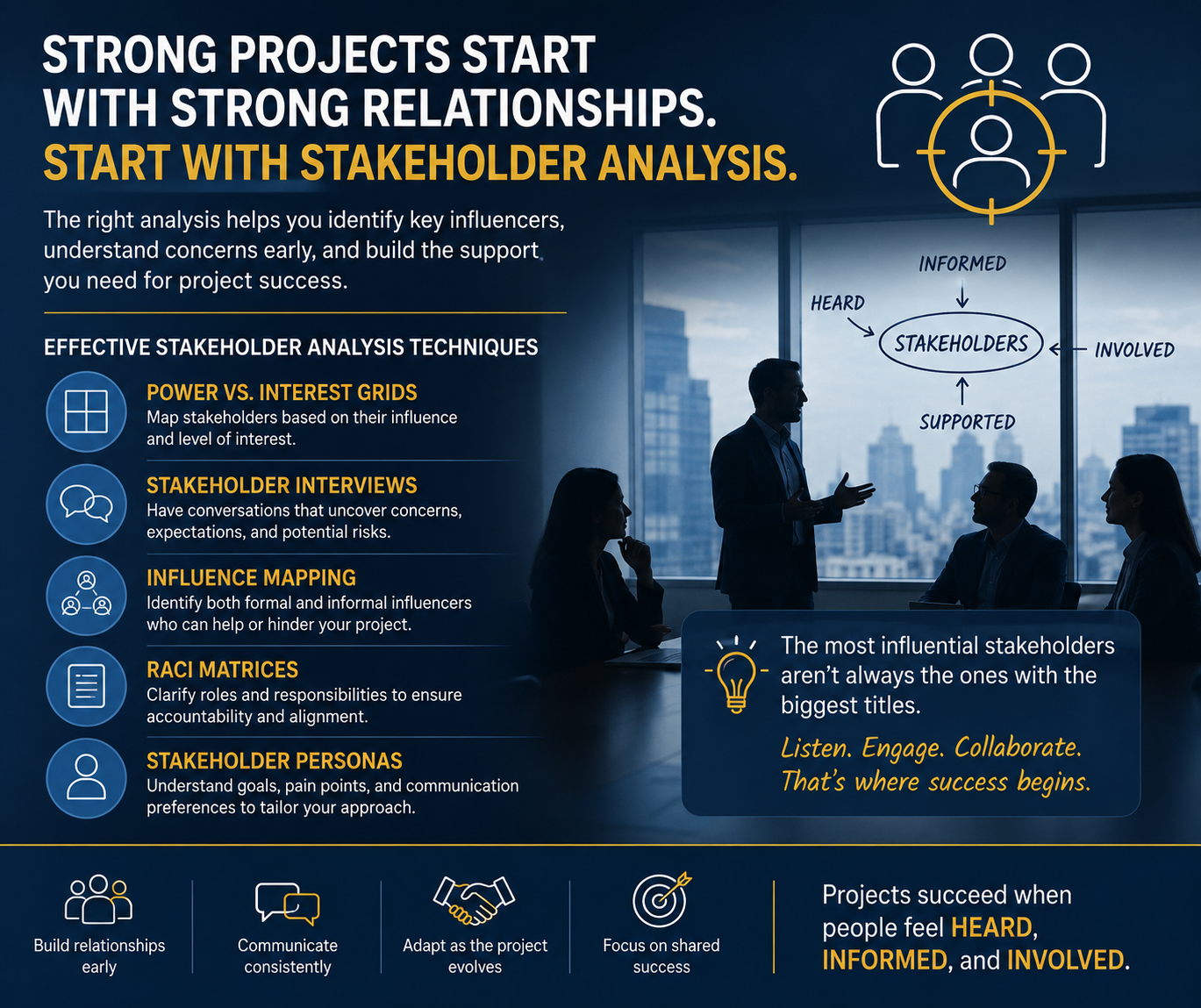
Stakeholder Analysis Techniques: A Practical Guide for Project Managers
In every successful project, one factor consistently stands out: effective stakeholder management. Whether you are implementing a healthcare system, leading an infrastructure upgrade, or managing a business transformation initiative, understanding your stakeholders can significantly improve project outcomes.
Stakeholder analysis is the process of identifying the individuals, groups, or organizations that can influence or be impacted by your project. More importantly, it helps project managers understand how to engage stakeholders appropriately throughout the project lifecycle.
As projects become more complex, especially in healthcare and technology environments, stakeholder analysis becomes less of a “nice to have” and more of a strategic necessity.
Why Stakeholder Analysis Matters
Projects rarely fail because of technology alone. Many fail because of:
- Poor communication
- Misaligned expectations
- Resistance to change
- Lack of executive support
- Unclear ownership
- Insufficient user engagement
Stakeholder analysis helps reduce these risks by creating a structured approach to understanding:
- Who your stakeholders are
- Their level of influence
- Their interests and concerns
- Their expectations
- Their impact on project success
A strong stakeholder strategy improves communication, reduces resistance, and builds long-term support for the initiative.
Key Stakeholder Analysis Techniques
1. Stakeholder Identification
The first step is identifying everyone affected by the project.
Common Stakeholder Categories
- Executive leadership
- Project sponsors
- End users
- Department managers
- IT teams
- Vendors
- Regulatory bodies
- Patients or customers
- Operational support teams
In healthcare projects, stakeholders may include:
- Physicians
- Nurses
- Biomedical teams
- Clinical operations
- Compliance departments
- Security teams
- Facilities teams
Helpful Techniques
- Brainstorming sessions
- Organizational chart reviews
- Process mapping
- Interviews with leadership
- Reviewing previous project documentation
The earlier stakeholders are identified, the easier it becomes to manage expectations proactively.
2. Power vs. Interest Grid
One of the most popular stakeholder analysis tools is the Power vs. Interest Grid.
This technique categorizes stakeholders based on:
- Their level of authority or influence
- Their level of interest in the project
The Four Categories
High Power / High Interest
Manage Closely
These stakeholders are critical to project success and require regular engagement.
Examples:
- CIO
- Executive sponsors
- Department directors
High Power / Low Interest
Keep Satisfied
These individuals may not be involved daily but can significantly influence the project if concerns arise.
Examples:
- Senior executives
- Regulatory leadership
Low Power / High Interest
Keep Informed
These stakeholders are often highly impacted by the project and need consistent communication.
Examples:
- Frontline staff
- End users
- Operational teams
Low Power / Low Interest
Monitor
These stakeholders require minimal communication but should still remain on the radar.
3. Stakeholder Influence Mapping
Influence mapping goes beyond formal titles and identifies who truly influences decisions.
Sometimes the most influential person in a project is not the executive sponsor. It may be:
- A respected nurse leader
- A long-term engineer
- A department coordinator
- An informal team leader
Questions to Ask
- Who do others listen to?
- Who can create momentum?
- Who can slow the project down?
- Who is resistant to change?
- Who champions innovation?
Understanding informal influence networks can dramatically improve project adoption and engagement.
4. Stakeholder Salience Model
The Stakeholder Salience Model prioritizes stakeholders based on three factors:
- Power
- Legitimacy
- Urgency
This model helps determine which stakeholders require immediate attention.
Example
A stakeholder with:
- High authority
- Legitimate involvement
- Time-sensitive concerns
…should likely become a top communication priority.
This technique is especially useful in large healthcare organizations where competing priorities exist.
5. Stakeholder Interviews
One of the most effective techniques is simply talking to stakeholders directly.
Structured interviews uncover:
- Concerns
- Expectations
- Political sensitivities
- Operational challenges
- Desired outcomes
Effective Interview Questions
- What does project success look like to you?
- What concerns do you have?
- What risks do you foresee?
- How will this project impact your team?
- What communication style do you prefer?
- What would cause frustration during implementation?
These conversations often reveal risks long before they appear in status meetings.
6. Stakeholder Personas
Creating stakeholder personas can help teams better understand different audiences.
A stakeholder persona may include:
- Role
- Goals
- Pain points
- Communication preferences
- Level of technical understanding
- Key concerns
Example
Clinical Director Persona
- Concerned about patient safety
- Limited time availability
- Prefers concise updates
- Highly influential with nursing staff
- Resistant to workflow disruption
Personas help tailor communication and training approaches more effectively.
7. RACI Matrix
A RACI matrix clarifies stakeholder responsibilities.
RACI stands for:
- Responsible
- Accountable
- Consulted
- Informed
This technique prevents confusion and helps ensure accountability.
Benefits
- Clarifies ownership
- Improves communication
- Reduces duplication of effort
- Minimizes decision-making delays
For large technical or healthcare projects, a RACI matrix is often essential.
Common Stakeholder Management Mistakes
Even experienced project managers can struggle with stakeholder engagement.
Common Pitfalls
Ignoring frontline staff
Frontline teams often identify operational risks early.
Overcommunicating to executives
Executives typically prefer concise, high-level summaries.
Treating all stakeholders the same
Different stakeholders require different communication styles.
Waiting until resistance appears
By the time resistance becomes visible, trust may already be damaged.
Failing to revisit stakeholder analysis
Stakeholder influence can change throughout the project lifecycle.
Best Practices for Effective Stakeholder Analysis
Update Regularly
Stakeholder dynamics change as projects evolve.
Document Everything
Maintain:
- Stakeholder registers
- Communication preferences
- Risks
- Concerns
- Escalation paths
Tailor Communication
Different audiences require different messaging.
Build Relationships Early
Trust built early helps navigate challenges later.
Focus on Active Listening
Stakeholder analysis is not just about categorizing people — it is about understanding them.
Final Thoughts
Stakeholder analysis is one of the most valuable skills a project manager can develop. Strong technical planning may get a project started, but strong stakeholder engagement is often what determines long-term success.
Projects succeed when people feel:
- Heard
- Informed
- Involved
- Supported
By applying stakeholder analysis techniques consistently, project managers can improve communication, reduce resistance, strengthen collaboration, and lead projects more effectively.
For healthcare and IT projects especially, where operational impact and organizational change are significant, stakeholder analysis is not optional — it is a core leadership skill.
— Brian Bond, MBA, PMP, RMP, CCNA, ITIL Expert
Brian Bond PMP