One of the most common reasons projects struggle is not necessarily poor planning, lack of technical skill, or unrealistic timelines. More often than not, project issues can be traced back to one major problem: poor communication.
Teams become misaligned. Stakeholders feel uninformed. Expectations become unclear. Small misunderstandings turn into major issues.
This is why creating a strong communication plan is one of the most important responsibilities of a project manager.
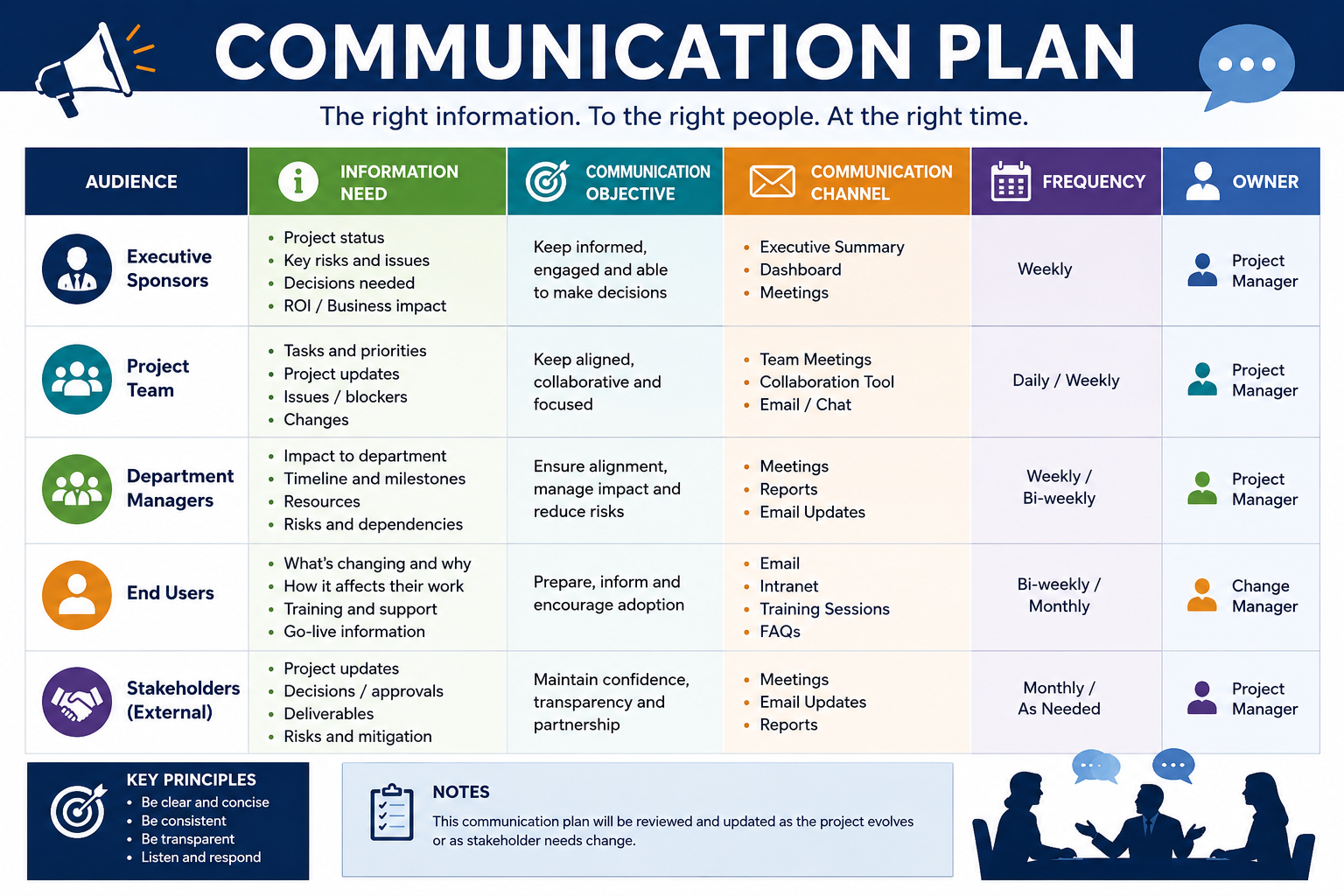
A well-designed communication plan helps ensure the right information reaches the right people at the right time in the right format.
In healthcare and IT projects especially, communication can directly impact operational efficiency, stakeholder confidence, and overall project success.

What Is a Communication Plan?
A communication plan is a structured approach for managing how project information will be shared throughout the project lifecycle.
It defines:
- Who needs information
- What information they need
- When communication will occur
- How communication will be delivered
- Who is responsible for communicating
A communication plan creates consistency and helps reduce confusion across teams and stakeholders.
Why Communication Plans Matter
Without a communication plan, projects often experience:
- Confusion around responsibilities
- Stakeholder frustration
- Duplicate work
- Missed deadlines
- Escalations caused by surprises
- Resistance to change
- Reduced trust in project leadership
Strong communication creates alignment.
When stakeholders feel informed and engaged, projects run more smoothly and teams collaborate more effectively.
Communication Is More Than Status Updates
One of the biggest misconceptions in project management is that communication simply means sending status reports.
Effective communication involves:
- Setting expectations
- Managing stakeholder engagement
- Escalating risks early
- Clarifying responsibilities
- Supporting organizational change
- Building trust across teams
- Ensuring transparency
Great project managers understand that communication is continuous and intentional.
Key Components of a Communication Plan
1. Stakeholder Identification
The first step is identifying everyone who needs project information.
This may include:
- Executive leadership
- Department managers
- Clinical staff
- IT teams
- Vendors
- Compliance teams
- End users
- Project sponsors
Different stakeholders require different levels of detail and communication frequency.
For example:
- Executives may want high-level summaries
- Technical teams may require detailed implementation updates
- End users may need training and workflow communication
Understanding the audience is critical.
2. Define Communication Types
Projects typically require multiple forms of communication.
Examples include:
- Project status reports
- Steering committee updates
- Team meetings
- Executive summaries
- Risk escalations
- Training communications
- Change management messaging
- Go-live notifications
Each communication type should have a clear purpose.
3. Determine Communication Frequency
Consistency is important.
Stakeholders should know when to expect updates.
Examples:
- Weekly project team meetings
- Biweekly steering committee meetings
- Monthly executive updates
- Daily stand-ups during critical phases
- Immediate escalation communications for high-risk issues
Predictable communication builds confidence and trust.
4. Choose Communication Methods
Different situations require different communication channels.
Common communication methods include:
- Microsoft Teams or Slack
- Video conferencing
- Dashboards
- Project management tools
- In-person meetings
- Executive presentations
- Training sessions
The communication method should fit the audience and urgency of the message.
For example:
- A critical system outage may require immediate calls or Teams messages
- A routine status update may only require email communication
5. Assign Ownership
Every major communication should have a clear owner.
Without ownership, communication gaps often occur.
Examples:
- Project manager owns weekly status reports
- Technical lead owns infrastructure updates
- Training lead owns end-user communication
- Executive sponsor owns leadership escalations
Clear accountability improves consistency.
Healthcare Project Example
Imagine a healthcare organization implementing a new Electronic Health Record (EHR) enhancement.
The project involves:
- Physicians
- Nurses
- Pharmacy teams
- IT infrastructure teams
- Cybersecurity teams
- Vendors
- Hospital leadership
Without a structured communication plan, confusion could quickly develop.
Example Communication Plan Elements:
| Audience | Communication Type | Frequency | Method | Owner |
|---|---|---|---|---|
| Executive Leadership | Project Status Summary | Monthly | Presentation | Project Manager |
| Clinical Staff | Workflow Updates | Biweekly | Email/Meetings | Clinical Lead |
| IT Teams | Technical Coordination | Weekly | Teams Meeting | Technical Lead |
| End Users | Training Notifications | Prior to Go-Live | Email/LMS | Training Team |
| Steering Committee | Risks and Escalations | Biweekly | Meeting | PMO |
This structure creates visibility and alignment across the organization.
The Importance of Active Listening
Communication is not only about delivering information — it is also about listening.
Strong project managers:
- Ask questions
- Clarify concerns
- Encourage feedback
- Validate understanding
- Adapt communication styles to stakeholders
Some of the best project insights come from frontline staff, technical teams, or stakeholders who feel comfortable speaking openly.
Communication should always be a two-way process.
Common Communication Mistakes in Projects
Overcommunicating Technical Details to Executives
Leadership often wants concise summaries focused on business impact, risks, and decisions.
Undercommunicating Organizational Change
Teams are more resistant when they feel uninformed.
Delaying Risk Escalations
Waiting too long to communicate risks can damage trust and reduce response options.
Assuming Everyone Understands the Same Information
Different teams interpret information differently.
Inconsistent Messaging
Mixed communication creates confusion and frustration.
Communication Plans Should Evolve
Just like risk registers and project schedules, communication plans should evolve throughout the project lifecycle.
Projects change.
Stakeholders change.
Priorities shift.
The communication approach that worked during planning may not work during go-live or stabilization.
Effective project managers continuously evaluate communication effectiveness and adjust as needed.
Final Thoughts
A communication plan is one of the most important tools for driving project success.
Strong communication helps create alignment, reduce uncertainty, improve stakeholder engagement, and build trust across teams.
The most successful project managers understand that communication is not simply about sending updates — it is about creating clarity, consistency, and confidence throughout the project lifecycle.
In healthcare and technology projects where complexity is high and operational impacts are significant, communication can often determine whether a project struggles or succeeds.
The right message, to the right people, at the right time, can make all the difference.
— Brian Bond, MBA, PMP, RMP
Project Management | Healthcare Technology | Leadership
BrianBondPMP.com